
Growth in government contracting can be exciting, but let’s be honest, it can also get messy fast. One new contract turns into three. Hiring ramps up overnight. Payroll jumps. Cash gets tighter. Suddenly, leadership teams are making high-stakes decisions with limited visibility into what’s really happening beneath the surface.
That’s where monthly financial reporting becomes more than just an accounting exercise.
For high-growth GovCon firms, the right metrics act like an operational dashboard. They help founders, CEOs, and leadership teams spot risks earlier, improve profitability, and scale with far fewer surprises along the way.
The problem is that many government contractors still rely too heavily on year-end financial statements or basic bookkeeping reports. Those tools matter, of course, but they don’t always provide the forward-looking insight leaders need when growth accelerates.
The most successful government contractors tend to monitor a smaller set of high-impact metrics consistently every month. Not because they love spreadsheets, but because they understand something important: growth without visibility can become expensive in a hurry.
Here are five of the most important metrics smart government contractors keep a close eye on every single month.
1. Contract Profitability by Project
Revenue growth looks great on paper. But if certain contracts are quietly draining margins, rapid growth can create operational strain instead of financial strength.
That’s why project-level profitability matters so much.
Many government contractors only evaluate profitability at the company level. The problem? One underperforming project can hide behind several profitable ones for months before leadership notices.
Tracking gross profit margin by project each month helps answer critical questions like:
- Which contracts are generating the strongest returns?
- Where are labor overruns becoming common?
- Are subcontractor costs climbing unexpectedly?
- Which project managers consistently protect margins?
- Are pricing assumptions still realistic?
The formula itself is simple:
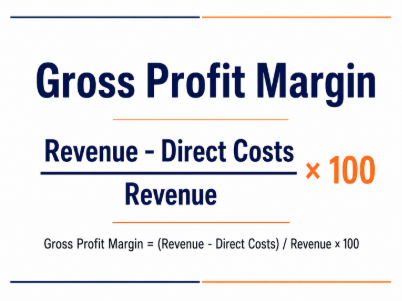
But the insights behind it are incredibly valuable.
For example, a growing engineering firm may discover that smaller compliance support contracts produce healthier margins than larger implementation projects requiring heavier staffing. That kind of visibility can influence future bidding strategy, staffing decisions, and long-term growth planning.
Without project-level visibility, profitability problems often remain hidden until year-end reviews. By then, correcting course becomes much harder.
2. Utilization Rate
In service-based government contracting businesses, labor efficiency drives profitability more than almost anything else.
That’s why utilization rate is one of the most closely watched operational KPIs in mature GovCon firms.
Utilization measures how much employee time is spent on billable, revenue-generating work versus non-billable activities.
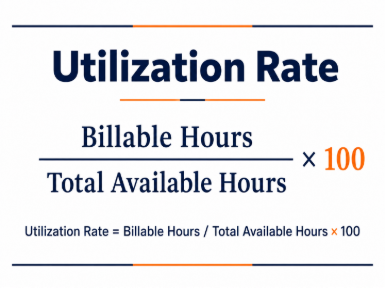
A declining utilization rate can quietly erode profitability even when revenue appears strong.
Here’s the tricky part: many fast-growing contractors assume hiring more people automatically improves scalability. Sometimes it does. Other times, it creates excess overhead before enough contract work exists to support the added labor costs.
Monitoring utilization monthly helps leadership teams:
- Forecast hiring more accurately
- Align staffing with contract demand
- Improve proposal pricing assumptions
- Reduce indirect cost pressure
- Prevent operational inefficiencies
On the other hand, utilization that’s consistently too high can create a different problem entirely, employee burnout.
When technical teams remain overloaded month after month, delivery quality can suffer. Recruiting becomes harder. Turnover increases. Eventually, growth starts creating operational friction instead of momentum.
The healthiest GovCon firms usually maintain a balanced utilization range that supports both profitability and sustainable delivery capacity.
3. Cash Flow Visibility and Receivables Aging
Winning contracts doesn’t always mean cash arrives quickly.
Government contractors often deal with delayed approvals, reimbursement timing issues, contract modifications, and slow payment cycles. Even profitable companies can feel financial pressure when receivables start stretching too far.
That’s why strong monthly cash flow visibility matters so much.
Leadership teams should consistently monitor:
- Accounts receivable aging
- Days Sales Outstanding (DSO)
- Cash reserves
- Upcoming payroll obligations
- Expected contract billing timing
A rising receivables balance can signal operational problems long before they show up elsewhere in the financials.
Sometimes the issue is simple:
- invoices submitted late
- incomplete documentation
- weak collections follow-up
Other times, it points to deeper contract administration challenges.
Fast-growing contractors are especially vulnerable here. Growth often increases labor costs, recruiting expenses, and infrastructure investments before customer payments fully catch up.
Ironically, some businesses experience their greatest cash stress during periods of rapid revenue expansion.
Monthly cash flow forecasting helps leadership avoid reactive decision-making. Instead of scrambling when cash tightens unexpectedly, companies gain the ability to plan hiring, investments, and growth initiatives with more confidence.
And frankly, predictable cash flow creates a calmer business environment overall. That alone can be worth the effort.
4. Indirect Rate Trends
Indirect rates may sound like an accounting topic, but for government contractors, they’re really a strategic growth issue.
Overhead, fringe, and G&A rates directly affect:
- pricing competitiveness
- profitability
- proposal strategy
- compliance positioning
- scalability
When indirect costs rise faster than revenue, margins can shrink surprisingly fast.
That’s why experienced GovCon leadership teams monitor indirect rate trends monthly instead of waiting until year-end adjustments.
Common warning signs include:
- overhead growing faster than labor revenue
- rising non-billable payroll costs
- excessive administrative expansion
- declining labor utilization
- benefit costs increasing unexpectedly
Many contractors underestimate how quickly operational growth impacts indirect structure.
Adding management layers, increasing recruiting efforts, investing in software systems, or expanding infrastructure can all shift indirect costs significantly. Without visibility, firms may continue pricing contracts using outdated assumptions.
That creates a dangerous situation:
- proposals become less profitable
- future rates become harder to control
- competitive positioning weakens
For companies pursuing larger federal contracts or preparing for DCAA scrutiny, indirect rate discipline becomes even more important.
Monthly monitoring gives leadership the opportunity to adjust proactively instead of reacting after margins have already deteriorated.
5. Revenue Concentration Risk
This metric doesn’t get discussed nearly enough in growing GovCon businesses.
A company can appear financially healthy while carrying substantial concentration risk beneath the surface.
For example:
- one agency represents 70% of revenue
- one prime contractor drives most subcontracting work
- one contract vehicle dominates future pipeline opportunities
That kind of dependency creates vulnerability.
Contract delays, rebids, budget freezes, or leadership changes inside an agency can quickly disrupt growth projections.
Tracking revenue concentration monthly helps leadership evaluate:
- customer diversification
- contract exposure
- pipeline stability
- long-term growth sustainability
Healthy diversification doesn’t happen overnight, especially for startups and emerging contractors. Still, visibility matters.
Companies that monitor concentration risk early can make more strategic business development decisions before dependency becomes a serious operational issue.
This metric also becomes increasingly important during:
- merger discussions
- investor reviews
- banking relationships
- strategic planning
A diversified revenue base generally creates stronger long-term business stability, and frankly, less stress for leadership teams.
Warning Signs These Metrics Are Moving in the Wrong Direction
Numbers rarely deteriorate all at once. Usually, small warning signs show up first.
Government contractors should pay close attention when they notice:
- utilization rates consistently declining
- receivables aging beyond normal cycles
- shrinking project margins
- overhead costs rising faster than revenue
- increasing dependence on one contract or agency
- cash reserves tightening despite revenue growth
Individually, these issues may seem manageable.
Together, though, they often signal deeper operational strain developing behind the scenes.
The earlier leadership teams identify these patterns, the easier they are to correct.
Why Monthly Visibility Matters More During Growth
Early-stage and high-growth contractors often focus heavily on winning work, which makes sense. Revenue growth fuels expansion opportunities.
But sustainable scaling requires operational visibility too.
Monthly executive reporting helps leadership:
- make faster decisions
- improve forecasting accuracy
- strengthen profitability
- reduce surprises
- improve hiring timing
- support smarter growth planning
More importantly, it shifts financial management from reactive to proactive.
That’s a major difference between firms that scale strategically and firms that constantly feel like they’re trying to catch up.
Wrapping Things Up
Government contracting brings enormous growth opportunities, but it also introduces layers of financial complexity that many businesses underestimate early on. Revenue alone doesn’t tell the full story. Neither do year-end financial statements.
The contractors that tend to scale most successfully are usually the ones paying attention to operational signals month after month, not just during tax season or annual reviews.
Tracking project profitability, utilization, cash flow trends, indirect rates, and revenue concentration gives leadership a clearer view of what’s really driving performance behind the scenes.
And when visibility improves, decision-making usually improves with it.
For growing GovCon firms, that kind of clarity can make expansion feel a whole lot more intentional, and a lot less chaotic. Learn more at Cheryl Jefferson & Associates!